Most homeowners think about water only when something goes wrong. A salty taste where there shouldn’t be one. Soap that suddenly stops lathering. Scale creeping back onto fixtures you swore you’d already cleaned. Water systems, especially softeners, have a funny way of fading into the background when they’re working—and demanding attention only when they aren’t.
But here’s the thing: good water doesn’t stay good on autopilot forever. It needs a little care. Not constant fussing, just the kind of attention that keeps small issues from turning into big, annoying ones.
When “set it and forget it” almost works
Water softeners are often sold as low-maintenance solutions, and compared to many home systems, that’s true. They don’t need daily checks or weekly tinkering. Once installed, they quietly do their job, exchanging minerals, protecting plumbing, and making everyday water feel easier to live with.
Still, “low maintenance” isn’t the same as “no maintenance.” Over time, components wear down, settings drift, and performance can slip just enough to be noticeable. The tricky part is that it happens gradually. You adapt. You compensate. You assume it’s just how things are now.
Until one day, you realize your water doesn’t feel the way it used to.
Why maintenance feels optional—until it isn’t
Home systems that fail loudly get fixed quickly. A broken heater. A leaking pipe. But water softeners tend to fail quietly. Efficiency drops before functionality disappears. Minerals sneak back into your water without announcing themselves.
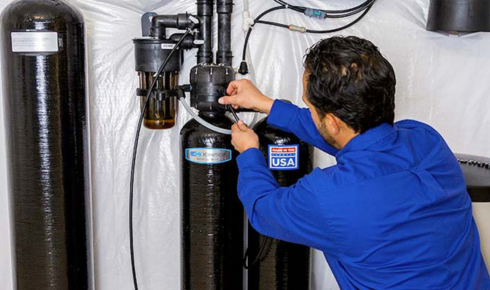
This is why water softener maintenance services exist—not to upsell, but to restore performance before frustration sets in. A proper service doesn’t just “check if it’s running.” It looks at resin condition, valve function, salt efficiency, and overall system health.
Think of it less like a repair and more like a tune-up. You’re not fixing a problem; you’re preventing one.
What maintenance actually does (and doesn’t)
There’s a misconception that maintenance is just a technician showing up, pressing a few buttons, and leaving. In reality, good service is diagnostic. It answers questions you may not even know to ask.
Is the system regenerating properly?
Is it sized correctly for current water usage?
Has water chemistry changed since installation?
Maintenance doesn’t magically upgrade your system or turn it into something it’s not. What it does is bring it back to its intended performance. And that alone can make a noticeable difference in how your water feels.
The value of professional eyes
Some homeowners handle basic upkeep themselves—adding salt, checking settings, making sure nothing looks obviously wrong. That’s great. But there’s a limit to what DIY observation can catch.
Professional maintenance services bring experience into the equation. A trained technician has seen patterns across hundreds of homes. They know what early wear looks like. They can spot inefficiencies long before they become failures.
It’s the difference between noticing a symptom and understanding the cause.
When reliability is the whole point
Certain systems are designed with longevity and consistency in mind, which is why people often choose brands known for durability. With kinetico water treatment, for example, the appeal isn’t flashy features—it’s dependable performance without electricity or complex programming.
That simplicity doesn’t eliminate the need for maintenance, but it does change its nature. Servicing becomes about preserving efficiency rather than troubleshooting electronics. Fewer parts mean fewer surprises, but even the most reliable systems benefit from periodic checkups.
Reliability is something you protect, not something you assume will last forever without care.
How neglected systems quietly cost more
Skipping maintenance doesn’t always lead to immediate failure. What it leads to is inefficiency. The system uses more salt than necessary. Regeneration cycles drift out of sync with actual water usage. Minerals slip through unnoticed.
Over time, that inefficiency shows up in places you don’t connect to the softener at first—shorter appliance lifespan, more scale buildup, higher cleaning product use. None of these feel dramatic on their own, but together they cost time, money, and patience.
Maintenance, in this light, isn’t an expense. It’s a cost-control strategy.
Why timing matters more than frequency
One mistake homeowners make is thinking maintenance has to be frequent to be effective. It doesn’t. What matters more is timing. Servicing a system before performance drops too far is far more effective than waiting until problems are obvious.
Most households benefit from periodic service based on water usage, system type, and local water conditions—not a generic calendar reminder. A thoughtful schedule adapts to reality instead of forcing routine for routine’s sake.
Good maintenance respects how people actually live.
The emotional side of consistent water
Water quality has an emotional component that’s easy to overlook. When water behaves the way you expect it to, life feels smoother. Showers feel better. Dishes come out clean. Appliances run quietly in the background.
When water quality slips, that smoothness disappears. You compensate without noticing. Extra cleaning. Extra products. Extra effort. Maintenance restores not just performance, but ease.
And ease, in a home, is underrated.
What homeowners usually notice after service
After a proper service, most people don’t say, “Wow, everything is completely different.” They say things like, “The water feels right again,” or “Soap works better,” or “That weird buildup stopped coming back.”
These are small observations, but they’re meaningful. They signal that the system is doing what it’s supposed to do, without calling attention to itself.
That’s the goal.
A thoughtful ending, because water deserves it
Water systems don’t need constant attention, but they do need respect. A little care, applied at the right time, keeps them working quietly and effectively for years longer than neglect ever would.
Maintenance isn’t about chasing perfection. It’s about preserving consistency. When your water softener is well cared for, water fades back into the background of your life—and that’s exactly where it belongs.
Sometimes the smartest home improvements aren’t upgrades at all. They’re simply the choice to keep what you already have working the way it should.